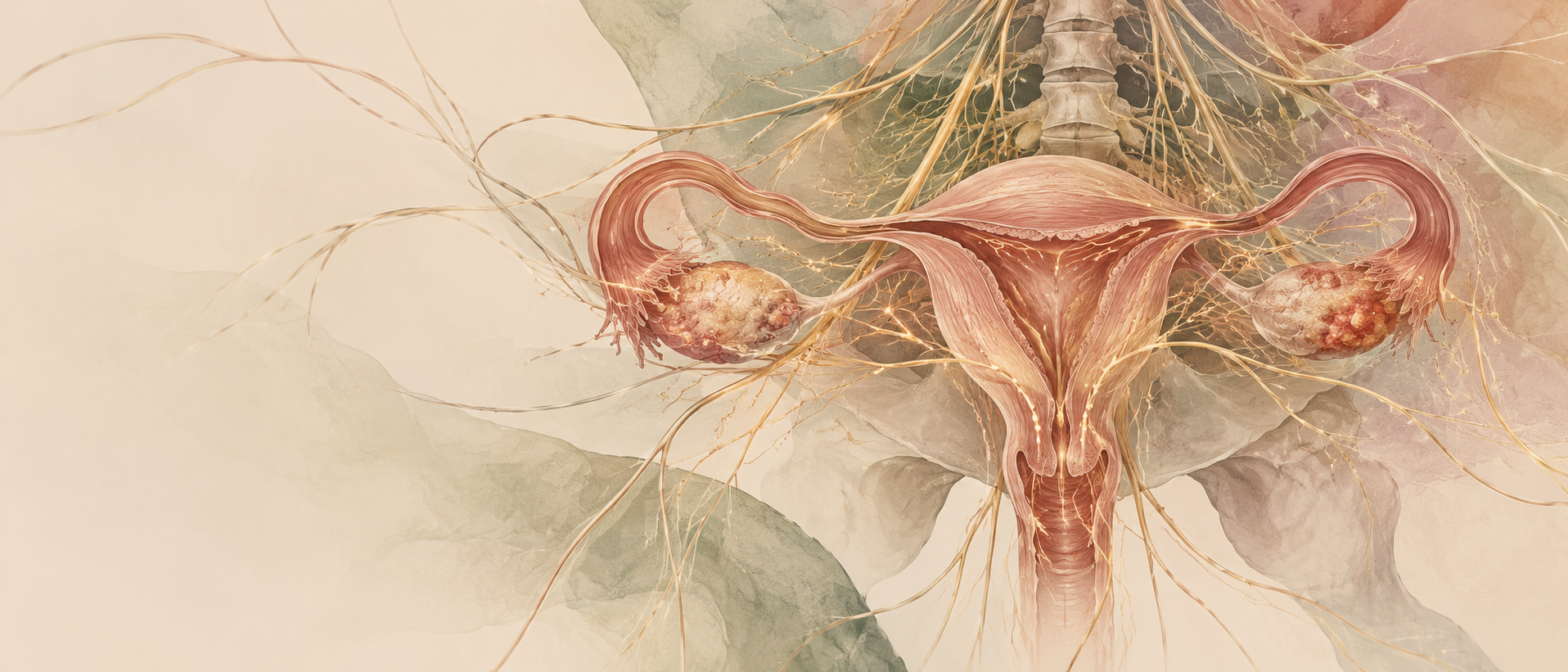
Why Endometriosis Pain Is So Complex: Inflammation, Nerves and the Brain
The answer lies partly in the complex relationship between inflammation, the immune system and the nervous system.
When we think of endometriosis, painful periods are often the first thing that comes to mind. But for many people living with the condition, the experience is far more complex.
Lower back pain, digestive issues, bladder discomfort, painful intercourse and persistent pelvic pain can all be part of the picture. Some people even experience pain in their shoulders or chest.
So how can a condition associated with the reproductive system cause symptoms in so many different parts of the body? And why can someone with relatively mild endometriosis experience debilitating pain, while another person with extensive disease has very few symptoms?
To understand this, we need to look beyond the endometriotic lesions themselves and explore something equally important: how inflammation, nerves and the brain interact to produce and regulate pain.
What actually happens in endometriosis?
Endometriosis is a chronic inflammatory condition in which tissue resembling the lining of the uterus (endometrium) grows outside the uterus.
These growths, known as lesions, are most commonly found within the pelvis, around the ovaries, pelvic lining and structures supporting the uterus. In some cases, endometriosis can also affect the bowel, bladder, diaphragm and other areas of the body.
Endometriotic lesions respond to hormonal influences, particularly oestrogen, and can contribute to inflammation, scarring, adhesions and irritation of surrounding tissues.
But here's where things get interesting.
The amount of endometriosis present doesn't necessarily reflect how much pain someone experiences.
That's because pain isn't simply a direct measurement of tissue damage. It's an experience created by the nervous system in response to information coming from the body, influenced by many biological processes.
And in endometriosis, several of these processes can become particularly active.
1. Inflammation: When nerves become more sensitive
Endometriotic lesions create an inflammatory environment involving immune cells and chemical messengers such as prostaglandins, cytokines and growth factors.
These substances don't just contribute to inflammation. They can also affect nearby sensory nerves, making them more responsive to stimulation.
One important molecule is nerve growth factor (NGF), which helps regulate the growth and sensitivity of nerve fibres.
Research has identified increased nerve growth and altered nerve signalling around some endometriotic lesions. Together with inflammatory mediators, these changes can make surrounding nerves easier to activate.
This process is called peripheral sensitisation.
Think of it as turning up the sensitivity on a smoke alarm. The alarm is still doing its job, but it may start responding to smaller amounts of smoke than it normally would.
Similarly, sensitised nerves may generate stronger signals in response to sensations that would otherwise cause little discomfort.
This can contribute to painful periods, pelvic tenderness, discomfort during intercourse and pain associated with bowel or bladder activity.
However, inflammation around lesions is only one piece of the puzzle.
2. Why can endometriosis cause bowel, bladder and back pain?
This is one of the most fascinating aspects of endometriosis, and it comes down to how our nervous system is organised.
The uterus, bowel and bladder are separate organs, but their sensory pathways aren't completely independent.
Signals from these organs travel through peripheral nerves into the spinal cord, where some of them converge onto shared networks of neurons.
This overlap is important because the spinal cord doesn't simply pass sensory information straight to the brain. It also processes and modifies that information along the way.
When one sensitive organ affects another
Imagine someone with endometriosis who initially experiences severe menstrual cramps.
Over time, they also begin noticing discomfort when their bladder fills, occasional urinary urgency and abdominal cramping during bowel movements.
Does this necessarily mean endometriosis has spread to their bladder or bowel?
Not always.
One possible explanation is a process called visceral cross-sensitisation.
Persistent nociceptive signals from an inflamed or irritated pelvic organ can increase the excitability of shared spinal pathways. Because these pathways also receive information from neighbouring organs, sensitivity may develop in those organs too.
In other words, the nervous system's response to ongoing irritation in one organ may influence how it processes sensations coming from another.
For example- The uterus sends repeated pain-related signals into the spinal cord during menstruation. Some spinal neurons receiving this information also process sensory input from the bladder or bowel.
If these networks become more excitable, normal bladder filling or bowel movement may begin to feel uncomfortable or painful.
This doesn't necessarily mean the bladder or bowel is damaged. The way its sensory information is being processed may have changed.
What about lower back and hip pain?
A related process, called viscerosomatic convergence, helps explain why pain originating from internal organs can sometimes be felt in muscles and other body structures.
Sensory pathways from pelvic organs overlap with pathways carrying information from areas such as the lower back and pelvis.
This can contribute to referred pain, while persistent discomfort may also encourage protective muscle guarding and increased pelvic floor tension.
Of course, not every symptom is caused by cross-sensitisation. Endometriosis can directly involve the bowel, bladder or pelvic nerves, and other conditions can coexist.
But understanding these shared pathways helps explain why endometriosis can produce such a wide range of symptoms, even when lesions are confined to a relatively small area.
3. When the spinal cord and brain become more sensitive
So far, we've looked at inflammation around endometriotic lesions and how sensory pathways from different pelvic organs can interact.
But what happens when pain signals continue over months or even years?
For some people, persistent nociceptive input can contribute to changes in how the spinal cord and brain process sensory information.
This is known as central sensitisation.
Our nervous system has built-in mechanisms that can increase or decrease the intensity of pain-related signalling.
These include networks within the spinal cord and brainstem, as well as brain regions involved in interpreting sensory information and regulating pain.
Under normal circumstances, these systems help us respond appropriately to potentially harmful stimuli.
However, with ongoing pain, some of these pathways may become more excitable, while inhibitory mechanisms may become less effective.
The result can be a nervous system that responds more strongly to incoming sensory signals.
For someone with endometriosis, this may contribute to:
Pelvic pain continuing outside menstruation.
Increased sensitivity to pressure, movement or touch.
Pain extending into the lower back, hips or other areas.
Heightened sensitivity during periods of poor sleep or stress.
Coexisting persistent pain conditions.
Importantly, central sensitisation doesn't mean pain is imagined, exaggerated or purely psychological.
It describes physiological changes in how the nervous system processes sensory information.
It also doesn't happen to everyone with endometriosis, and the presence of persistent pain doesn't automatically mean central sensitisation is involved.
4. Why can endometriosis pain persist after surgery?
One of the more frustrating experiences for people with endometriosis is continuing to have pain after surgery.
Laparoscopic surgery can be an important part of treatment, particularly when endometriotic lesions or adhesions contribute to symptoms.
For many people, surgery provides meaningful improvement.
But for others, pain may persist or return.
There are several possible reasons for this, including residual or recurrent endometriosis, adhesions, pelvic floor dysfunction and other overlapping pain conditions.
In some cases, changes in peripheral and central pain processing may also continue after the original source of irritation has been reduced.
Think back to the smoke alarm analogy.
Even if the original source of smoke has been removed, a highly sensitive alarm may continue reacting to much smaller triggers.
The nervous system can behave in a somewhat similar way when pain-processing pathways have become sensitised.
This doesn't mean the nervous system is permanently damaged or that symptoms cannot improve.
It simply highlights why persistent endometriosis-associated pain sometimes requires a broader approach than surgery or hormonal treatment alone.
5. Endometriosis beyond the pelvis: The diaphragm and chest
Although endometriosis most commonly affects structures within the pelvis, it can occasionally occur around the diaphragm or within the chest cavity.
These less common presentations are particularly interesting because they demonstrate how the location of a symptom doesn't always correspond to the location of the underlying problem.
For example, someone with diaphragmatic endometriosis may experience shoulder-tip pain around menstruation.
Why the shoulder?
The diaphragm receives sensory innervation partly through the phrenic nerve, which originates from spinal segments C3–C5 in the neck.
These segments also receive sensory information associated with the shoulder region.
Because of this shared spinal processing, irritation of the diaphragm can sometimes be perceived as pain in the shoulder.
This is an example of referred pain.
Thoracic endometriosis can also produce cyclical chest pain or breathing symptoms and, in some cases, complications such as a collapsed lung.
New or significant chest pain and shortness of breath should always be medically assessed promptly.
These presentations remind us that endometriosis isn't always confined to the reproductive organs, and its symptoms can involve several different anatomical and neurological pathways.
6. Where does acupuncture fit into endometriosis care?
At East Brunswick Acupuncture, I approach persistent pain by considering both the affected tissues and the nervous system pathways involved in processing pain.
This is particularly relevant when looking at a complex condition such as endometriosis.
Acupuncture stimulates sensory nerve fibres within the skin, muscles and connective tissues, sending signals through peripheral nerves to the spinal cord and brain.
Research into acupuncture and electro-acupuncture suggests several possible mechanisms through which this stimulation may influence pain processing.
Modulating pain signals in the spinal cord
Sensory input from acupuncture may influence how nociceptive information is processed within spinal networks.
This is particularly interesting when considering the overlapping sensory pathways involved in pelvic pain, although research has not established that acupuncture reverses visceral cross-sensitisation in people with endometriosis.
Engaging the brain's pain-regulating systems
The brain contains networks that can either amplify or inhibit pain-related signals.
Experimental research suggests acupuncture can influence some of these descending pain-modulating pathways, including systems involving endogenous opioids and brainstem structures such as the periaqueductal grey.
Exploring autonomic and inflammatory pathways
The autonomic nervous system helps regulate many involuntary functions, including aspects of digestion, cardiovascular activity and immune signalling.
Experimental studies suggest that acupuncture and electro-acupuncture can influence certain autonomic and neuroimmune pathways.
However, much of this research comes from laboratory and animal studies, and its clinical relevance to endometriosis is still being investigated.
What does the research tell us?
Clinical research investigating acupuncture for endometriosis-associated pain has reported some promising findings.
A 2023 systematic review and meta-analysis found improvements in some pain-related outcomes among people receiving acupuncture.
However, studies have generally been small, with differences in treatment protocols and methodological quality.
Acupuncture may be considered as part of an individualised approach to symptom management, alongside appropriate medical care. It has not been established as a treatment that removes endometriotic lesions or prevents disease progression.
7. Looking at the bigger picture
Endometriosis is not experienced in the same way by everyone.
For one person, it may mean severe menstrual cramps. For another, it might involve bowel disturbances, lower back pain, discomfort during intercourse or persistent pelvic pain throughout the month.
And for some, symptoms may continue even after surgical treatment.
What we're learning from pain neuroscience is that these experiences can involve several overlapping processes: inflammation, peripheral nerve sensitisation, shared spinal pathways and changes in how the brain regulates pain.
Understanding these mechanisms doesn't make endometriosis any less of a physical disease.
Instead, it helps explain why symptoms can be so varied and why treatment often benefits from a multidisciplinary approach.
Medical and gynaecological care remain central to endometriosis management, with other approaches such as pelvic health physiotherapy, pain education and individualised symptom management potentially playing supportive roles.
The more we understand about how endometriosis interacts with the nervous system, the better we can appreciate why pain is so complex, and why every person's experience deserves an individualised approach.
References and further reading
ESHRE (2022). Guideline: Endometriosis. https://www.eshre.eu/Guidelines-and-Legal/Guidelines/Endometriosis-Guideline
Current developments in endometriosis-associated pain. (2024). Cell Reports Medicine. https://pubmed.ncbi.nlm.nih.gov/39413731/
Acupuncture for endometriosis: A systematic review and meta-analysis. (2023). https://pubmed.ncbi.nlm.nih.gov/38033648/
Omenge HJ et al. (2026). Endometriosis-associated Pain: Mechanism, Neuroimmune Signature, and Translational Precision Strategies. Endocrine Reviews. https://doi.org/10.1210/endrev/bnag019